How Agentic AI reorganizes the design process
A framework for moving from linear screen production to structured intent, reusable design knowledge, and evaluable AI output.
Agentic AI is not simply another generation tool in the design workflow. It changes how the workflow is organized, what designers are responsible for, and how design knowledge becomes reusable system assets.
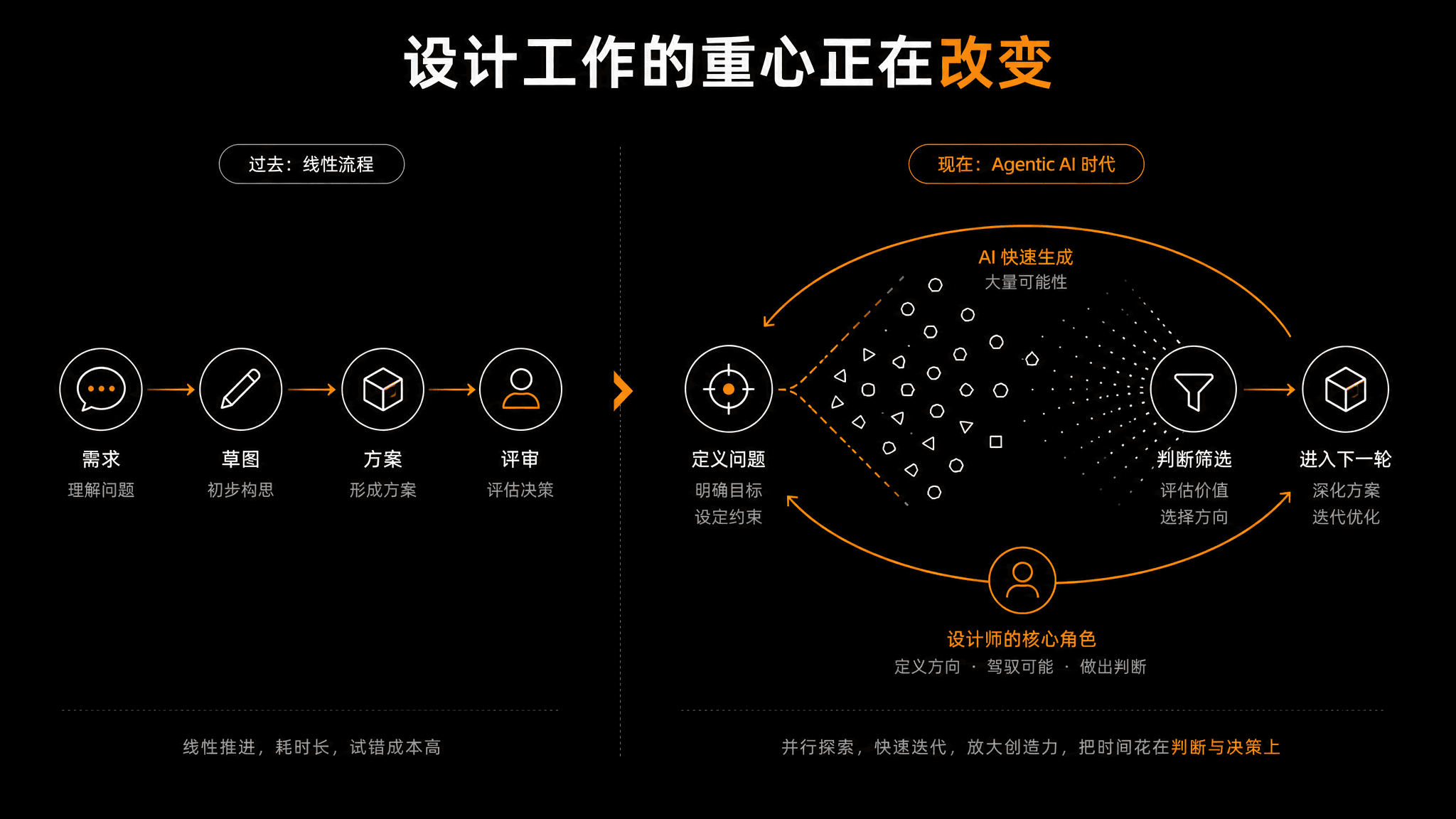
The center of design work is shifting
Design used to move linearly from requirements to sketches, proposals, reviews, and delivery.
With AI, many possibilities appear much earlier. A designer is no longer responsible only for producing an interface, but also for defining the problem, constraining the direction, and deciding which results deserve another round.
The practical question becomes: how can one design intent be understood, decomposed, generated, and eventually turned into something deliverable?
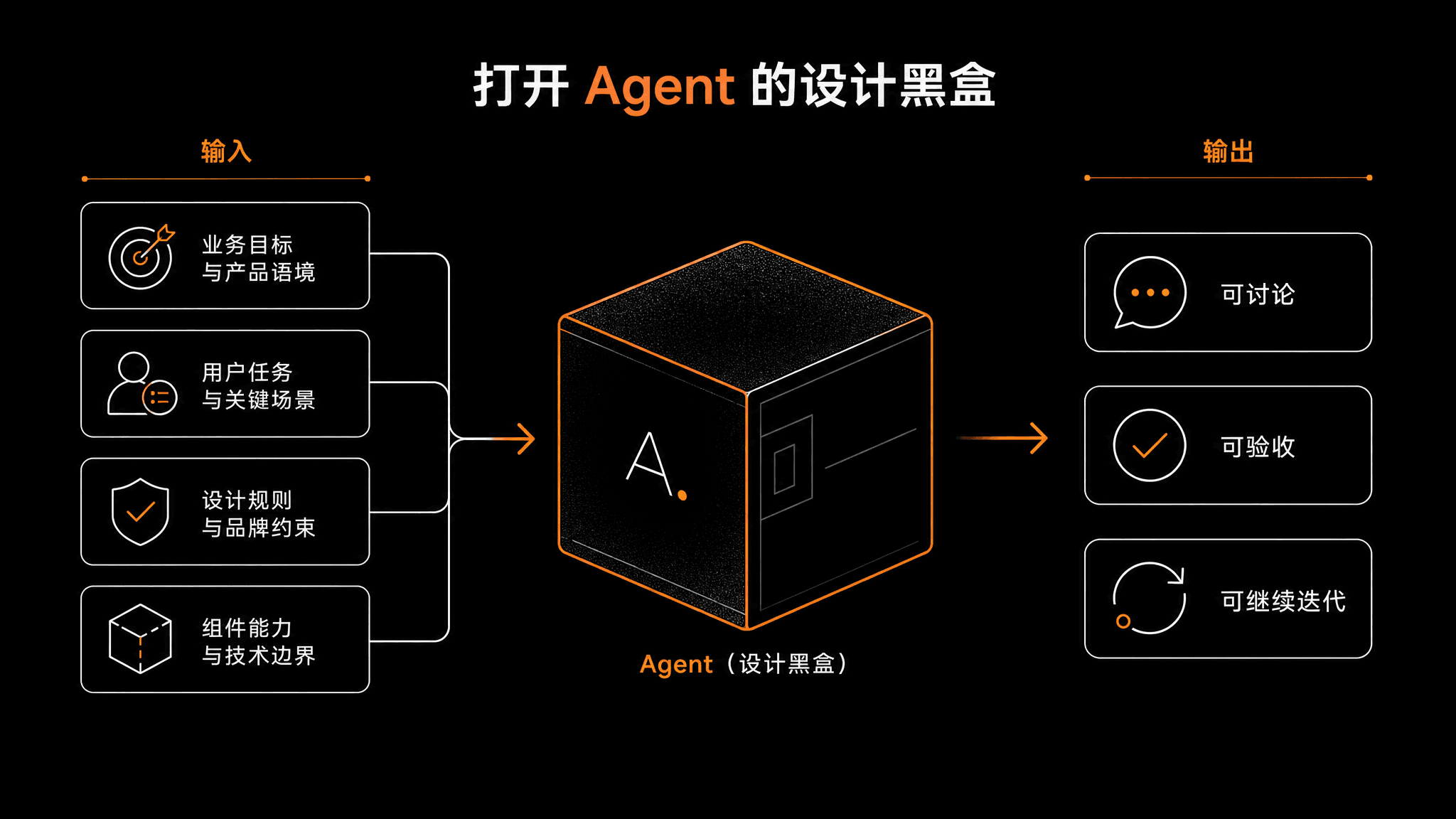
Open the Agent design black box
The input cannot be a prompt alone. It also needs business goals, product context, user tasks, design rules, component capabilities, and technical boundaries.
The output cannot stop at a generated page. It needs to become a design result that a team can discuss, validate, and continue to iterate.
The point is to place design judgment inside the generation process, so the Agent works with clear context and constraints.
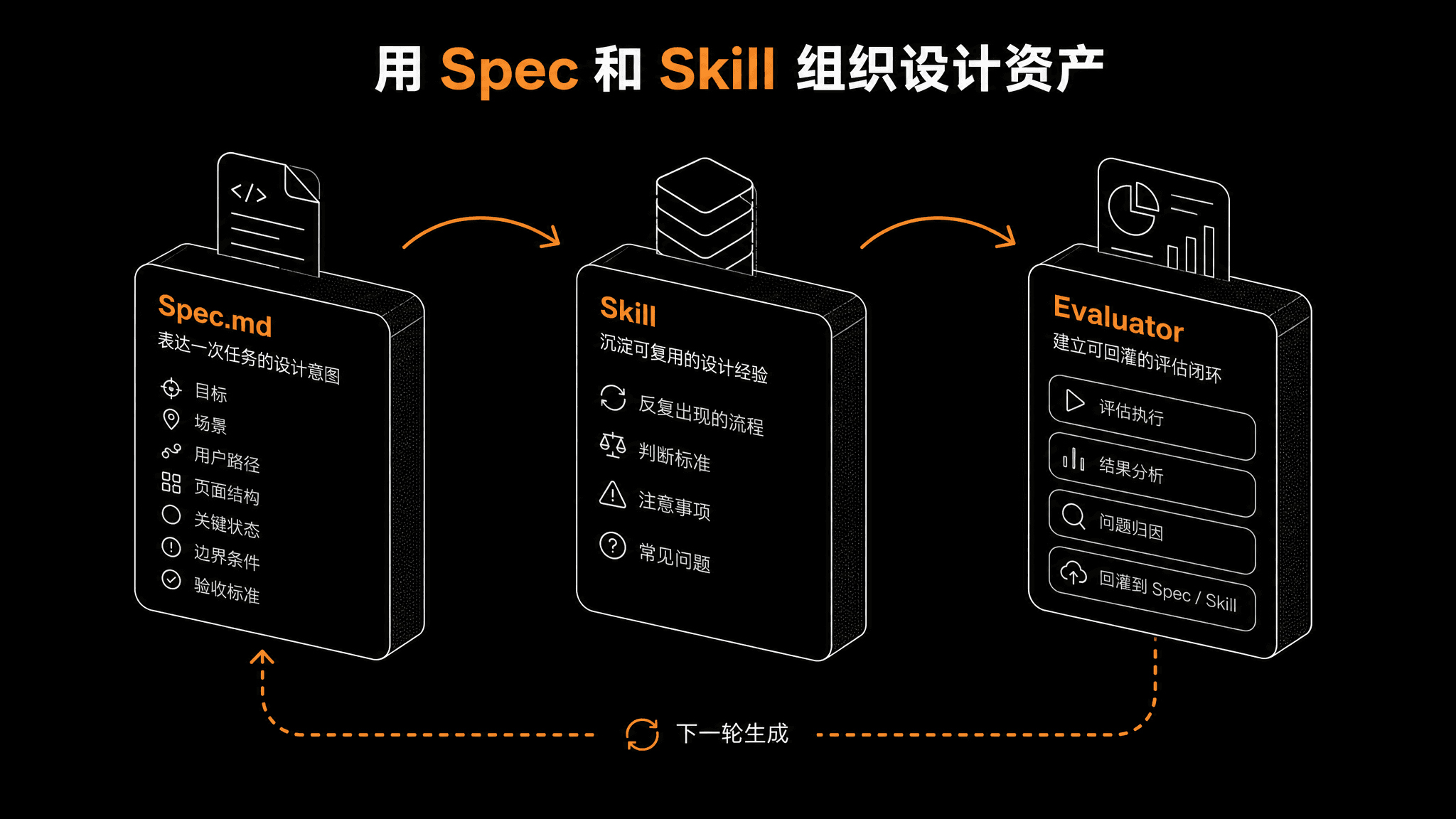
Organize design assets with Spec and Skill
A Spec gives one task a complete design context. A Skill packages recurring workflows and judgment so the next similar task does not have to begin from zero.
Spec.md · Design intent
Clarify goals, scenarios, user paths, page structure, key states, boundaries, and acceptance criteria before generation begins.
Skill · Reusable experience
Package recurring processes, judgment criteria, cautions, and common failure modes into capabilities that can be triggered when needed.
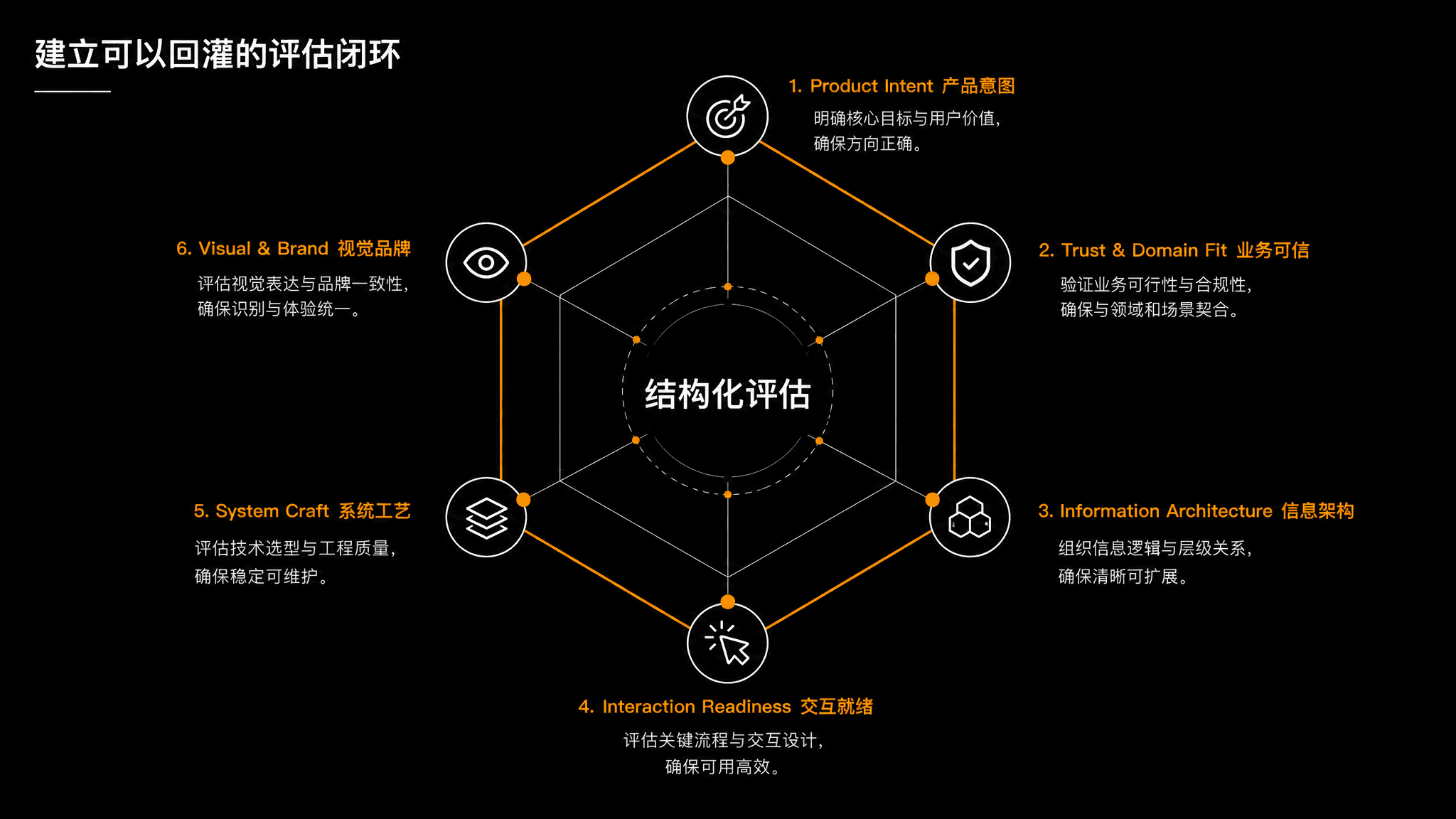
Build an evaluation loop that feeds back
Generation is only the beginning. The result needs structured evaluation, and the feedback should become input for the next round.
The purpose is not to hand judgment over to a system. It is to decompose judgment into rules that can be read, executed, and reviewed.
Product Intent
Value, target user, primary task, and first-screen priority.
Trust & Domain Fit
Compliance, risk guidance, terminology, and domain rules.
Information Architecture
Structure, grouping, hierarchy, and navigation.
Interaction Readiness
Critical paths, primary actions, feedback, and exceptions.
System Craft
Components, spacing, type, state styles, and responsiveness.
Visual & Brand
Hierarchy, recognition, color, icons, and finish.
Reposition the designer
The designer shifts from interface executor toward a vision architect: defining problems, organizing Spec, Skill, and Evaluator assets, and continuously calibrating direction and quality.
AI increases generation speed, but it does not remove design work. More of the designer's value moves toward intent, rules, systems, and judgment.